22 Conclusion
The declaration of food samples is increasingly more complex. For consumers, the declaration is very important and therefore needs a certain transparency. The EU regulation 1169/ 2011 demands a detailed declaration of food samples. Most important is the differentiation of total fat in saturated and unsaturated fatty acids, which is the top criteria for the consumer to differentiate between healthy and unhealthy food, as has been the subject of two studies. The determination of total fat content as well as unsaturated and saturated fatty acids is regulated in ISO norms.
In this work, two methods have been developed. The first method represents a procedure for digestion and extraction of the total fat content in a closed microwave system, based on a method of Weibull-Stoldt. Food samples from different areas (dairy products, luxury foods, meat and pastries) have been selected, and the application of the total fat determination using the microwave method in a closed system has been evaluated. It has been found to be a universal method for the determination of the total fat content in different food areas.
The second method corresponds to a microwave method, also in a closed system for derivatisation of fatty acid in FAMEs which are then analysed in a GC-FID system. The use of the developed microwave extraction method shows that the method is best suited for determination of the total fat content of food samples.
In the second method, food samples have been analysed for 37 different fatty acid methyl esters. This enables a comparison between the DIN method for digestion and extraction of the total fat content of a food sample with an ISO method for derivatisation of extracted fatty acids in FAMEs, with the developed microwave procedure consisting of microwave extraction method (MEM) and microwave derivatisation method (MDM).
The focus of this comparison is on the ratio between saturated and unsaturated fatty acids (milk powder, chocolate, sausage, chips).
The results show that the ratio of fatty acids differs between ISO and microwave procedure. The proportion of unsaturated fatty acids is always higher when the microwave procedure is applied.
The higher rate of findings of unsaturated fatty acids confirms the sensitivity of the unsaturated fatty acids related to the oxidation by air and heat influence.
The DIN procedure is an open system and requires heat over a long period of time which has an influence on the unsaturated fatty acids (oxidation). The microwave system is a closed system with a significant shorter heat application and reduced oxidation of unsaturated fatty acids. The microwave procedure is therefore a gentler and preferable method as far as unsaturated fatty acids are concerned.
References
1. Verordnung (EU) Nr. 1169/2011 des Europäischen Parlaments und des Rates vom 25. Oktober 2011 betreffend die Information der Verbraucher über Lebensmittel und zur Änderung der Verordnungen (EG) Nr. 1924/2006 und (EG) Nr. 1925/2006 des Europäischen Parlaments. at <
http://eur-lex.europa.eu/ LexUriServ/
LexUriServ.do?uri=OJ:L:2011:304:0018:0063:de:PDF>
2. LFGB. Bestimmung des Gesamtfettgehalts in Fleisch und Fleischerzeugnissen- Gravimetrisches Verfahren nach Weibull-Stoldt. 3 (2014).
3. Matissek, R., Steiner, G. & Fischer, M. Lebensmittelanalytik. (2010). doi:10.1007/978-3-540-92205-6
4. Norm, D. Gaschromatographie von Fettsäuremethylestern Teil2: Herstellung von Fettsäuremethylestern. 25 (Perinorm, 2011).
5.
Reaktionsmechanismus_Veresterung.gif (GIF-Grafik, 600 x 184 Pixel). at
http://www.mn-net.com/Portals/4/images/Redakteure_Chroma/GC/Biodiesel- Reaktion-DE600.gif
6.
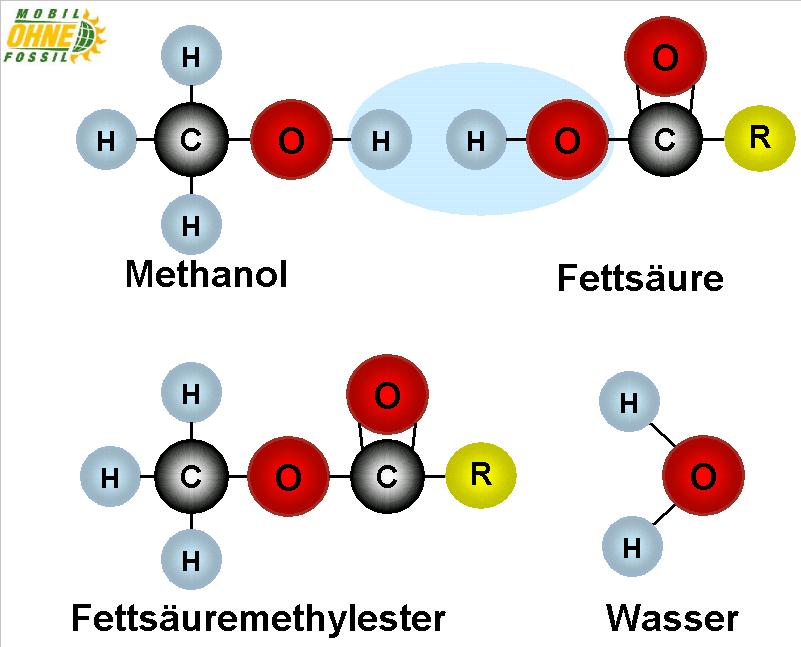
Veresterung_FAMES.jpg (JPEG-Grafik, 801 × 647 Pixel). at
http://www.mobilohnefossil.de/images/user/Biodiesel-Veresterung.jpg
Table 1: Identified FAMEs of 2 procedures in direct comparison. Positive findings are marked with X.
Nitrogen Dedicated Gas Solution for ELSD & Compact MS Applications Introduced
Peak Scientific, a global leader in laboratory gas generator solutions, has announced the launch of its latest bench-top nitrogen gas generator system, called Solaris. Developed to offer a compact and convenient gas source for labs using ELSD (Evaporative Light Scattering Detector) instruments and Compact Mass Spectrometers, Solaris provides a consistent source of nitrogen gas for these applications, typically requiring lower flow rates and specific purity.
With variable purity in relation to outlet flow and pressure, Solaris is a flexible solution for supplying nitrogen to one or two ELSD instruments, or a single Compact Mass Spec, capable of delivering up to 10L/min and at purity levels of up to 99.5% (at lower flow rates). Available with an optional dedicated air compressor module, Solaris shares a similar design to Peak’s modular Precision series (for GC applications), as the generator can be stacked on top of the compressor making the most of valuable workspace. Its stylish facia also functions as a status indicator as its colour indicative LED light alerts the user when the instrument reaches optimum purity and flow for analysis.
Describing Peak’s new gas generation solution, Product Manager, Petra Gierga stated: “Solaris gives the user a consistent on- demand flow of nitrogen gas and brings efficiency to labs by removing the inconvenience of cylinder changeovers. It also removes the safety concerns of storing large volumes of gas on-site. Solaris has been designed using existing, proven technology making it Peak’s optimal solution for ELSD and Compact Mass Spectrometers applications.”
As with all Peak Scientific products, Solaris, is engineered, assembled and performance tested at the company’s ISO 9001 accredited manufacturing centre in the UK, and is backed with Peak’s market-leading global on-site technical support.
Solaris debuted at the Japan Analytical & Scientific Instruments Show (JASIS), Makuhari Messe, on the 7-9th September. Solaris is available to order directly from Peak Scientific or authorised distributors and shipping now.
40168pr@reply-direct.com
Page 1 |
Page 2 |
Page 3 |
Page 4 |
Page 5 |
Page 6 |
Page 7 |
Page 8 |
Page 9 |
Page 10 |
Page 11 |
Page 12 |
Page 13 |
Page 14 |
Page 15 |
Page 16 |
Page 17 |
Page 18 |
Page 19 |
Page 20 |
Page 21 |
Page 22 |
Page 23 |
Page 24 |
Page 25 |
Page 26 |
Page 27 |
Page 28 |
Page 29 |
Page 30 |
Page 31 |
Page 32 |
Page 33 |
Page 34 |
Page 35 |
Page 36 |
Page 37 |
Page 38 |
Page 39 |
Page 40 |
Page 41 |
Page 42 |
Page 43 |
Page 44 |
Page 45 |
Page 46 |
Page 47 |
Page 48 |
Page 49 |
Page 50 |
Page 51 |
Page 52 |
Page 53 |
Page 54 |
Page 55 |
Page 56 |
Page 57 |
Page 58 |
Page 59 |
Page 60 |
Page 61 |
Page 62 |
Page 63 |
Page 64 |
Page 65 |
Page 66 |
Page 67 |
Page 68 |
Page 69 |
Page 70 |
Page 71 |
Page 72 |
Page 73 |
Page 74 |
Page 75 |
Page 76 |
Page 77 |
Page 78 |
Page 79 |
Page 80 |
Page 81 |
Page 82 |
Page 83 |
Page 84 |
Page 85 |
Page 86 |
Page 87 |
Page 88 |
Page 89 |
Page 90 |
Page 91 |
Page 92 |
Page 93 |
Page 94 |
Page 95 |
Page 96 |
Page 97 |
Page 98 |
Page 99 |
Page 100 |
Page 101 |
Page 102 |
Page 103 |
Page 104 |
Page 105 |
Page 106 |
Page 107 |
Page 108 |
Page 109 |
Page 110 |
Page 111 |
Page 112 |
Page 113 |
Page 114 |
Page 115 |
Page 116 |
Page 117 |
Page 118 |
Page 119 |
Page 120 |
Page 121 |
Page 122 |
Page 123 |
Page 124 |
Page 125 |
Page 126 |
Page 127 |
Page 128 |
Page 129 |
Page 130 |
Page 131 |
Page 132