When a student has a Specific Learning Difference (e.g. dyslexia, dyscalculia, dyspraxia, ADHD)
What should you be aware of?
Specific Learning Differences (SpLD)
This is an umbrella term for a range of conditions, including:
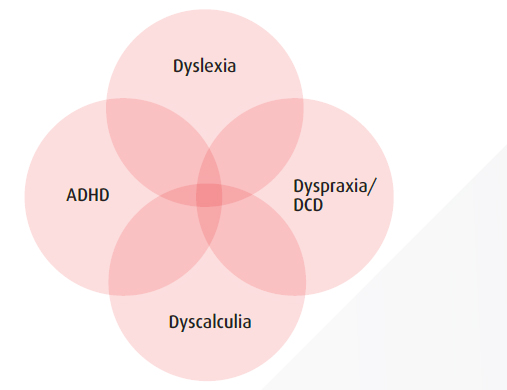
Co-occurrence of these conditions is the norm rather than the exception. Autistic Spectrum Disorders are not classified as Specific Learning Differences but often co-occur with them.
SpLD are neurological in origin, occur in individuals of all backgrounds, (irrespective of intellectual ability), vary in severity and tend to run in families.
They are lifelong conditions, often hidden and sometimes masked by compensatory strategies. Every individual is unique and has challenges and strengths in the way that he/she processes information. Please see the next page for some examples of these.
Challenges - Examples
□ reading efficiency
□ organisational skills
□ coordination
□ concentration
□ working memory
□ written composition
Strengths - Examples
□ creativity
□ problem solving skills
□ practical ability
□ verbal communication
□ holistic thinking
□ perseverance
What should you do?
What to do if you or a student suspects he/she has a SpLD
Ask the student to contact DDS for a screening appointment by:
— calling 020 8411 2502
— email: disability@mdx.ac.uk
— visit Sunny Hill House on the Hendon Campus site (Access via Greyhound Hill or Williams Building car park)
What happens next?
The process will be as follows:
Screening assessment with a Disability Advisor - if positive
Full diagnostic assessment with an independent assessor - if appropriate
Reasonable adjustments will be put in place
DSA application if eligible
For general advice and guidance about SpLD please contact Gurinder Grewal, g.grewal@mdx.ac.uk, Dawn Sandells, d.sandells@mdx.ac.uk or David Ramsden d.ramsden@mdx.ac.uk